
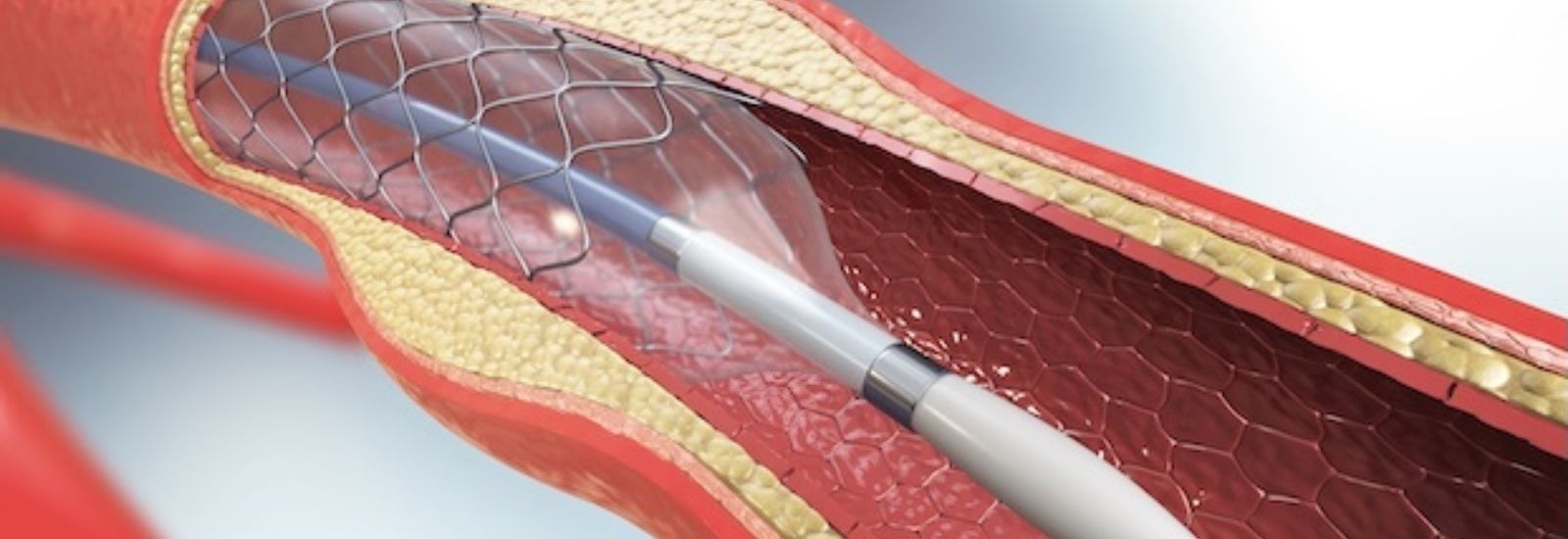
Cardiac Catheterization, Percutaneous Transluminal Coronary Angioplasty (PTCA), Percutaneous Coronary Intervention (PCI) or stent placement
These procedures are performed by inserting a catheter through the femoral artery in the groin, or more recently, through the radial artery in the wrist. A catheter is advanced to the heart’s coronary arteries where images are taken using an iodine contrast agent (the angiogram), and if blockages are seen, are opened using a balloon (angioplasty). To reduce the risk of the artery closing down, a small, metal mesh tube called a stent is frequently placed. To prevent clotting of the stent, aspirin and an anti-platelet medication will be prescribed.
There are two types of stents:
Bare-Metal Stent: a stent that has no drug coating. Normally, after the stent is
placed, the heart’s normal scar tissue grows over it to restore smooth and normal
blood flow again.
Drug-Eluting Stent: a stent with a medication that releases slowly over time to
prevent overgrowth of the heart’s scar tissue, which can sometimes lead to a new
type of blockage.
At times the angiogram will reveal normal coronary arteries with minimal to no
blockages at which time the procedure is completed without stent placement.
Also, the angiogram may be used to detect other problems involving the heart or aorta,
the major blood vessel that connects the heart to the other arteries in the body. With
Cardiac Catheterization (the actual process of threading the catheter to the heart),
oftentimes heart defects and the opening of tight and narrow heart valves can be done
without requiring open heart surgery.