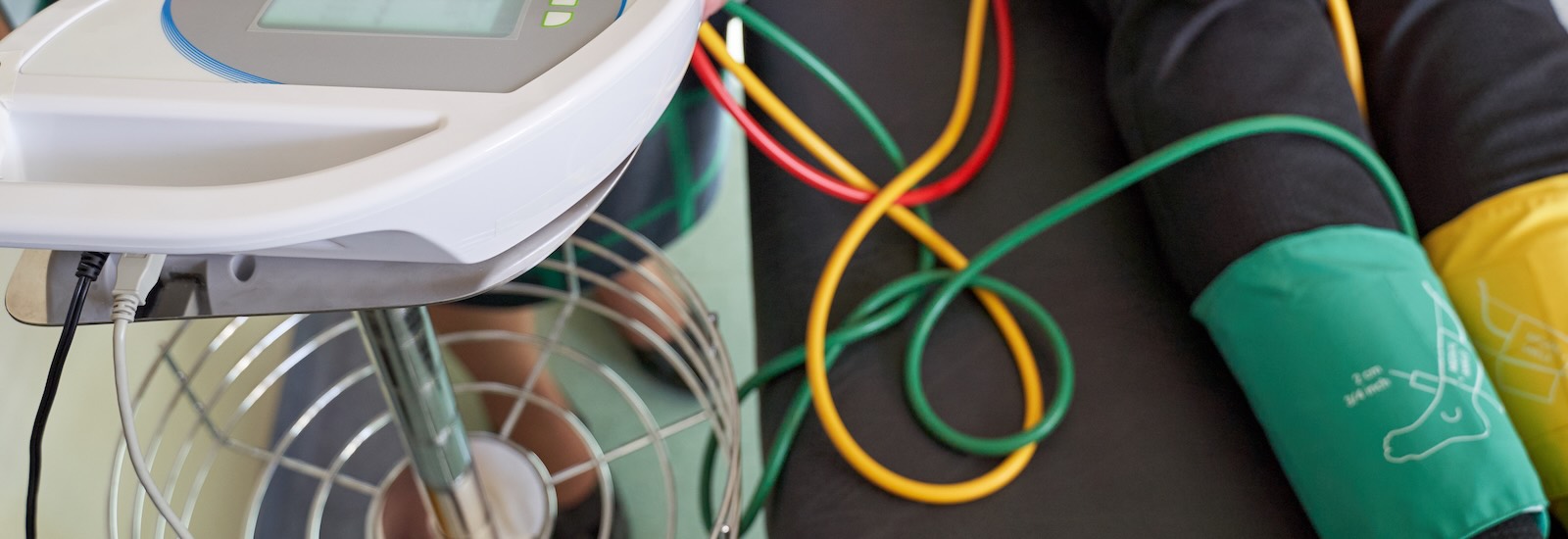
Ankle-Brachial Index for Peripheral Artery Disease

Example Callout Box

At Premier Cardiology, we use the ABI test to detect PAD early, enabling prompt treatment and lifestyle interventions to protect vascular and heart health.

The Ankle-Brachial Index (ABI) is a simple, non-invasive test used to assess blood flow in the legs and detect peripheral artery disease (PAD). PAD occurs when arteries in the legs become narrowed or blocked, reducing blood flow and increasing the risk of cardiovascular events such as heart attack, stroke, and coronary artery disease (CAD).

At Premier Cardiology, we use the ABI test to detect PAD early, enabling prompt treatment and lifestyle interventions to protect vascular and heart health.

What is the ABI Test?

The ABI test compares blood pressure measurements at the ankle and the arm. A lower ankle pressure relative to the arm indicates reduced blood flow in the legs, which may signal PAD. The test is quick, painless, and typically takes less than 15 minutes.

How it works:

  1. Blood pressure cuffs are placed on both arms and ankles.
  2. A Doppler ultrasound device measures blood flow and pressure.
  3. Ratios are calculated to determine the severity of arterial blockage.

An ABI ratio of 1.0–1.4 is considered normal, while 0.9 or below suggests PAD.

Why the ABI Test is Important

Early detection of PAD is critical because many patients may not experience symptoms until the disease has progressed. Untreated PAD can lead to:

  • Leg pain, cramping, or fatigue during walking (claudication)
  • Non-healing wounds or ulcers
  • Increased risk of heart attack and stroke
  • Impaired mobility and quality of life

The ABI test is often recommended for patients with risk factors such as high blood pressure, high cholesterol, diabetes, obesity, or a history of smoking.

Symptoms Indicating the Need for an ABI Test

Symptoms include the following;

  • Leg pain, cramps, or heaviness during walking
  • Cold or numb feet or toes
  • Poor wound healing in the lower extremities
  • Weak or absent pulses in the legs
  • Skin color changes or hair loss on the legs

Many patients with PAD are asymptomatic, making screening with the ABI test essential, especially for high-risk populations.

Diagnosis and Follow-Up

If the ABI test indicates PAD, additional tests may be performed, including:

  • Doppler ultrasound to visualize blood flow
  • Angiogram to identify blocked or narrowed arteries
  • CT Scan or MRI for detailed vascular imaging

Treatment plans are tailored based on severity and symptoms, including lifestyle modifications, medications, or interventional procedures such as angioplasty and stenting.

Treatment and Prevention

Treatment focuses on improving blood flow, managing symptoms, and preventing complications:

  • Lifestyle Changes – Exercise, smoking cessation, healthy diet
  • Medications – Cholesterol-lowering drugs, antiplatelets, and medications to improve circulation
  • Interventional Procedures – Angioplasty, stenting, or bypass surgery for severe cases

Regular monitoring using ABI and follow-up with a cardiologist ensures optimal vascular and heart health.